Active Leak? Same-day response across Central NJ — Call (732) 503-8133 now
⚠️ Emergency Roof Service · Central NJ · Same-Day Response

ROOF LEAKING
RIGHT NOW?
STOP THE DAMAGE
BEFORE IT GETS WORSE.

Most homeowners accidentally call a sales rep when they need a technician. Here's how to avoid that mistake — and what to do immediately.

24-Hour Response
NJ Licensed #13VH12304900
No Sales Pitch
Real Repairs, Not Quotes
Immediate Action

What to Do Right Now If Your Roof Is Leaking

1

Place a bucket or container under the leak.

If water is dripping from the ceiling, catch it before it spreads. Put a towel underneath to reduce splash.

2

If the ceiling is bulging or sagging, relieve the pressure.

Carefully puncture a small hole at the lowest point to drain the water into your bucket. This prevents the entire section from collapsing.

3

Move furniture, electronics, and valuables away from the area.

Water travels. Even if the drip is small, it may be spreading behind the drywall.

4

Check for electrical hazards.

If water is near light fixtures, outlets, or your electrical panel, turn off power to that area. Do not touch standing water near electrical sources.

5

Access the attic if it's safe.

If you can see where the water is entering from the attic side, place a bucket there too. This tells a technician exactly where the breach is.

6

Take photos and video of everything.

Timestamp your documentation. This is critical if you file an insurance claim later.

7

Do NOT get on the roof yourself.

Wet roofs are extremely dangerous. Damaged decking may not hold your weight. Leave roof access to a licensed crew with safety equipment.

The Sales Trap

You Think You're Calling for a Repair. They're Preparing for a Replacement Sale.

Your roof is leaking. You're stressed. You Google "emergency roof repair" and call the first company that comes up.

Here's what typically happens: The person who answers isn't a roofer. They're a call center rep or an appointment setter. They're trained to ask: "Will both homeowners be present?" — because their system requires both decision-makers in the room for the sales pitch.

They don't dispatch a technician. They schedule an "appointment" — usually 2–3 days out. A salesperson shows up, looks at your roof from the driveway, and presents a $25,000–$40,000 replacement contract. The leak? It becomes leverage.

You called for help. You got a presentation.

This isn't every company. But it's how the majority of the industry operates. And when your ceiling is dripping, you deserve to know the difference.

Know Who You're Getting

Sales Rep vs. Repair Technician

Sales Rep Repair Technician
Arrives with Clipboard, tablet, contract Tools, tarps, repair materials
First action Measures from the driveway Gets on the roof
Goal Close a replacement sale Stop the leak
Commission? Yes — 8–12% of the job No — paid to fix, not sell
Timeline "We'll schedule an estimate" "I can be there today"
Asks "Will your spouse be home?" "Where exactly is the leak?"
Stay in Control

Exact Words to Use When You Call a Roofer

"I have an active leak. I need a repair technician who can fix or tarp this today — not a sales estimate."

"Can someone with tools and materials come today, or do you only schedule appointments?"

"I'm not looking for a full replacement quote. I need the leak stopped."

If they can't send someone today, or if they insist on scheduling a "consultation" with both homeowners present — that's your signal. You called a sales company, not a repair service.
Inside Your Home

Why Roof Leaks Are Worse Than They Look

The drip you see is the end of the path, not the beginning.

Water Travels Farther Than You See

Water moves along rafters, trusses, and sheathing before it finds a ceiling penetration. By the time you see a drip, water may have been spreading for days or weeks inside your structure.

Saturated Insulation

Wet insulation loses its R-value immediately and takes weeks to dry — if it dries at all. Compressed, saturated insulation often needs full replacement, adding hundreds to your repair cost.

Mold Starts in 24–48 Hours

Mold colonization begins within one to two days on wet drywall, wood, and insulation. What starts as a leak repair can become a remediation project — a completely different category of cost.

Softened Decking & Stained Drywall

Roof decking that absorbs water begins to lose structural integrity. Drywall stains behind walls — hidden damage you won't see until renovation or resale. The faster the source is stopped, the less interior damage you'll pay for.

On Your Roof

What's Actually Causing Your Leak Right Now?

1

Wind-Driven Rain

Rain doesn't always come straight down. 40+ mph winds push water under shingles that are otherwise intact. If you had a recent storm, this is often the culprit — and one of the most straightforward repairs.

2

Failed Flashing

The metal strips around chimneys, pipes, skylights, and wall transitions are the most common leak point on any roof. Shingles can be perfect while flashing seals crack, lift, or corrode — and water finds the gap instantly.

3

Unsealed or Lifted Shingles

Shingles that lost their adhesive seal lift in wind and let water under the next layer. This happens gradually with age, then catastrophically in the first significant storm. It often affects only a few shingles — a targeted repair, not a replacement.

4

Ice Dam Damage

In winter, ice backs up under shingles and melts into the roof deck. The damage shows months later — when spring rain finds the compromised areas left behind. If your leak started in spring after a hard winter, an ice dam is a likely suspect.

"Missing shingles are the obvious suspect — but most leaks come from places you'd never think to check. Flashing, pipe boots, and lifted shingle edges are invisible from the ground."
Real Inspections

Did They Actually Walk Your Roof — Or Just Look at It from the Driveway?

A real inspection means someone physically walks every plane of the roof with their hands on the shingles. If your "inspector" never left the ground, you didn't get an inspection. You got a sales measurement.

Many companies perform "ground-level assessments" or drone flyovers. These are useful for measuring square footage for a replacement bid — which is exactly why they use them. From the truck, a salesperson can estimate what they need to write a contract.

What they can't see from the ground or a drone: soft decking, cracked flashing seals, lifted shingle edges, nail pops, or compromised pipe boots. These are the things that actually cause leaks. And they require someone physically on the roof to find them.

When you call Best Crew, the technician who arrives gets on your roof. Every time. No exceptions. That's how we find what's actually wrong — not what's most convenient to replace.

Insurance — The Truth

Should You Call Your Insurance Company Right Now?

Document everything first. Photos, video, timestamps — before anyone touches anything. This is your evidence and it supports your claim if you file one.

Get a professional assessment before calling your carrier. Once you open a claim, the clock starts. Your carrier will send an adjuster who works for them — not you.

Filing on minor damage can backfire. Claims — even small ones — can trigger premium increases or non-renewal. If the damage is under or near your deductible, it may not be worth filing at all.

The smart move: Know the actual scope of damage first, then decide whether to file. A licensed roofer can give you that scope honestly — before you're locked into an active claim.

Who Assesses Your Damage

Who Should Assess Your Damage — A Roofer or a Public Adjuster?

Roofer Public Adjuster
Focus Roofing scope only Total property damage
Paid by You (for the repair) % of your insurance payout (10–20%)
Advocacy Identifies what needs fixing Fights for maximum payout
When to use Repair or replacement needed Large claims, carrier disputes, denied claims

For most leaks, a licensed roofer is all you need. If your carrier denies a legitimate storm claim or lowballs the payout, a public adjuster levels the field.

What You Actually Need

You Don't Need a Sales Appointment. You Need Three Things.

1

The Leak Stopped.

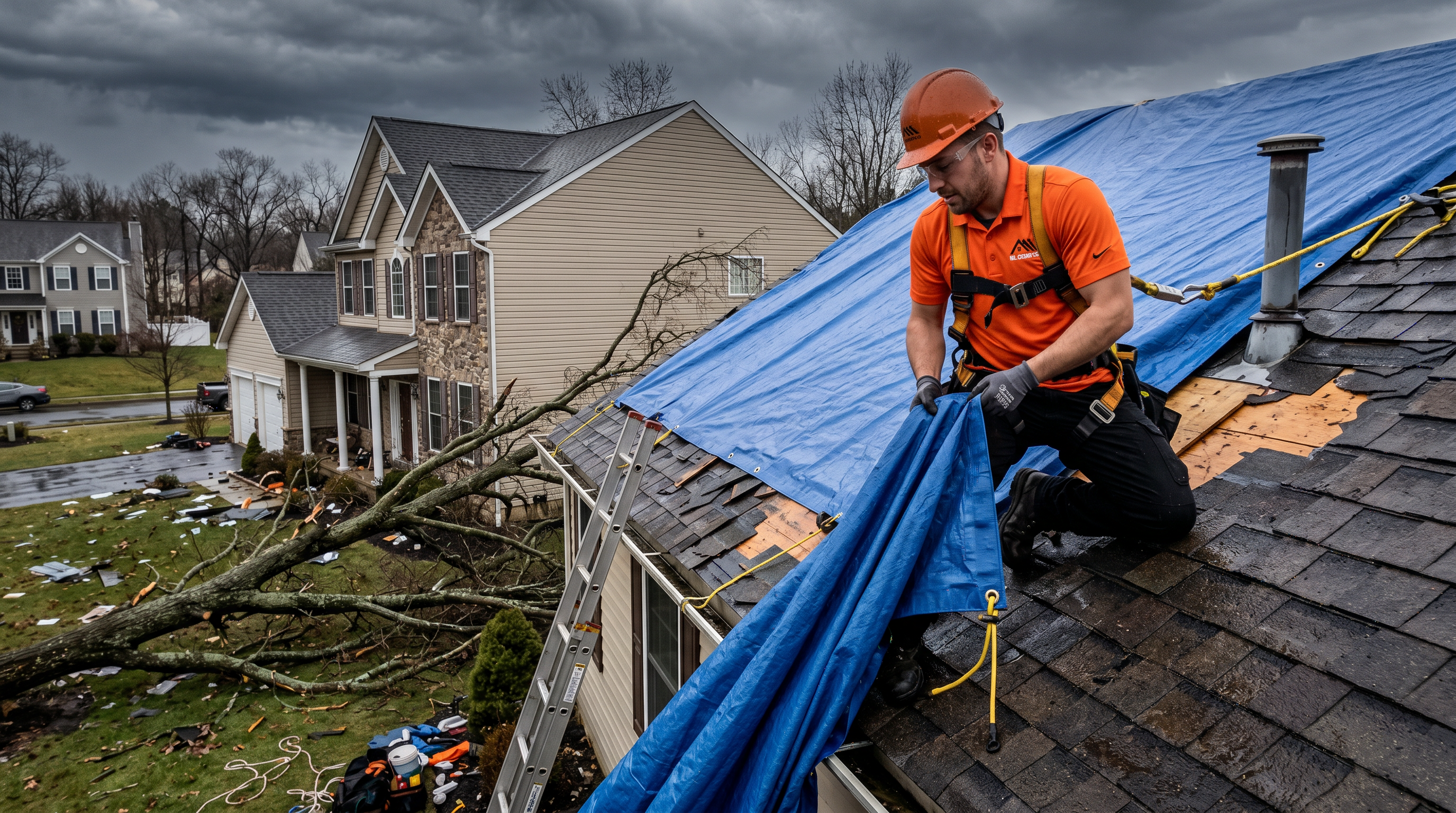
Tarp, patch, emergency seal — whatever it takes to prevent more water from entering your home today. Every hour matters when water is moving through your structure.

2

An Honest Damage Assessment.

Someone who walks your roof and tells you what's actually wrong — not what's most profitable to replace. Real findings, real options, real pricing.

3

Clear Next Steps.

What needs to happen, what it'll cost, and whether insurance makes sense — explained in plain language. No pressure. No expiring price. No "my manager said I can do this today only."

Emergency Roof Service

If Your Roof Is Leaking, the Priority Is Stopping the Damage — Not Selling You a Roof.

Call now and ask for a technician who can actually fix the problem.

CALL (732) 503-8133 — EMERGENCY REPAIR →

Same-day emergency response across Central NJ

No-pressure inspection — we tell you what's wrong, not what to buy

If we can repair it, we repair it. We don't upsell replacements on emergencies.

Serving Hamilton, Edison, Woodbridge, Piscataway, South Brunswick, Old Bridge, Howell, Marlboro, Manalapan, Freehold, and all of Mercer, Middlesex, Monmouth & Somerset Counties.

FAQ

Questions About Emergency Roof Leaks

Place a bucket under the drip, relieve pressure on any bulging ceiling, move valuables away from the area, and call a licensed roofer who can dispatch a repair technician today — not schedule a sales appointment.

Emergency tarping and temporary repairs typically cost $300–$800 depending on scope and accessibility. A permanent repair depends on the damage. We assess on-site and give you clear pricing before starting work.

No. Document the damage with photos and video first, then get a professional assessment. Once you open a claim, your carrier's adjuster works for them, not you. Know the scope before you file.

Same-day response across Mercer, Middlesex, Monmouth, and Somerset Counties. Call (732) 503-8133 and tell us you have an active leak.

A repair fixes the specific failure point — a patch, a reflash, a shingle replacement. A replacement is a full tear-off and reinstall. Many leaks can be repaired without replacing the entire roof. We'll tell you honestly which you need.

No. Our direct crew responds to every emergency. The technician who answers the call is the technician on your roof.